Servo-Driven vs Pneumatic Roll to Sheet Cutting Machines: Which Should You Choose?
When purchasing an automatic roll-to-sheet cutting machine, buyers often focus on cutting width, production speed, and automation features. However, one of the most important decisions happens much earlier in the selection process: choosing between a servo-driven system and a pneumatic system.
Both technologies are widely used in converting, packaging, printing, labeling, textile, foam, and industrial material processing applications. Each has its own strengths, limitations, and ideal use cases.
Some manufacturers prioritize precision and repeatability. Others focus on minimizing equipment investment. The right choice depends on production goals, material requirements, operating costs, and long-term business strategy.
I have worked with cutting machine buyers for more than 20 years, and one pattern appears repeatedly. Many buyers initially focus only on machine price. However, after reviewing production costs, scrap rates, maintenance requirements, and quality expectations, they often discover that the cheapest machine is not necessarily the most economical machine.
In this guide, I will compare servo-driven and pneumatic roll-to-sheet cutting machines and explain how they differ in precision, speed, maintenance requirements, operating costs, and overall return on investment.
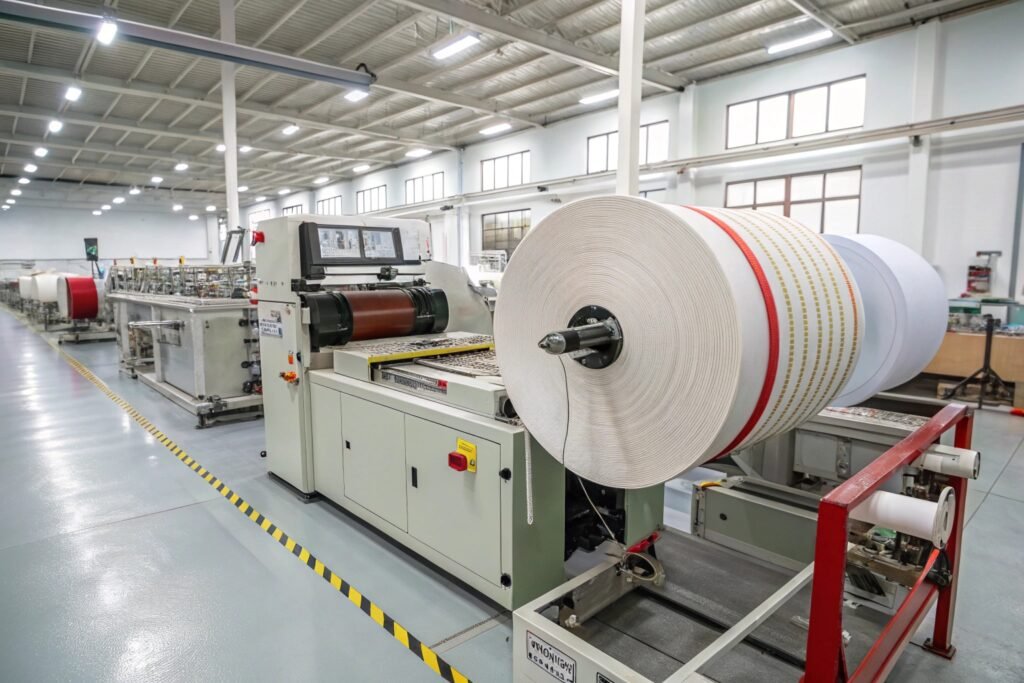
What Are the Differences in Precision, Speed, and Maintenance Requirements?
Servo-driven roll-to-sheet cutting machines provide higher precision, better repeatability, lower energy consumption, and reduced maintenance requirements. Pneumatic machines typically offer lower purchase costs and simpler operation but provide less control over positioning and cutting accuracy.
Quick Comparison Overview
| Feature | Servo-Driven Machine | Pneumatic Machine |
|---|---|---|
| Precision | Excellent | Moderate |
| Repeatability | Excellent | Good |
| Speed Control | Highly Adjustable | Limited |
| Energy Efficiency | Higher | Lower |
| Operating Cost | Lower Long-Term | Higher Long-Term |
| Initial Investment | Higher | Lower |
| Maintenance Requirement | Lower | Higher |
| Best Application | Precision Production | Basic Production |
For most modern industrial applications, servo-driven systems are becoming the preferred choice.
However, pneumatic systems still offer advantages in certain situations.
How Servo-Driven Roll-to-Sheet Cutting Machines Work
A servo-driven system uses electronic servo motors to control feeding, positioning, and cutting movements.
The servo motor continuously receives feedback from the control system and adjusts its position with exceptional accuracy.
Key Components
Servo Motor
Provides precise motion control.
Encoder Feedback
Monitors actual machine position.
Intelligent Controller
Coordinates machine movements.
Motion Programming
Allows highly accurate operation.
Benefits of Servo Technology
| Feature | Advantage |
|---|---|
| Closed-Loop Control | Higher Accuracy |
| Digital Positioning | Better Repeatability |
| Adjustable Motion Profiles | Improved Flexibility |
| Fast Response | Better Productivity |
This technology allows manufacturers to achieve extremely consistent cutting results.
How Pneumatic Roll-to-Sheet Cutting Machines Work
Pneumatic systems use compressed air to generate movement.
Air cylinders drive cutting actions and material handling functions.
Because the technology is relatively simple, pneumatic machines are often more affordable.
Key Components
Air Compressor
Generates compressed air.
Pneumatic Cylinders
Provide motion.
Valves
Control airflow.
Air Lines
Distribute pressure throughout the system.
Benefits of Pneumatic Systems
| Feature | Advantage |
|---|---|
| Simple Design | Easier Installation |
| Lower Purchase Cost | Reduced Initial Investment |
| Fast Movement | Good Productivity |
| Proven Technology | Wide Industry Use |
Pneumatic systems remain popular in entry-level and budget-conscious applications.
Precision Comparison: Why Servo Systems Lead
Precision is one of the biggest differences between these technologies.
Modern converting operations often require exact sheet lengths, tight tolerances, and consistent product quality.
Servo Precision Advantages
Position Control
Servo motors stop exactly where commanded.
Continuous Feedback
The system constantly corrects deviations.
Repeatable Results
Each cut remains consistent.
Pneumatic Precision Limitations
Compressed air naturally fluctuates.
Changes in air pressure, temperature, and load can affect positioning accuracy.
Precision Comparison
| Precision Factor | Servo-Driven | Pneumatic |
|---|---|---|
| Length Accuracy | Excellent | Moderate |
| Repeatability | Excellent | Good |
| Fine Adjustments | Excellent | Limited |
| High-Tolerance Work | Ideal | Less Suitable |
For labels, film, printed materials, and precision converting applications, servo systems usually provide superior results.
Speed Control and Production Flexibility
Many buyers assume pneumatic systems are always faster because air cylinders move quickly.
In reality, production performance depends on more than raw movement speed.
Servo System Advantages
Variable Speed Control
Motion can be optimized for each material.
Smooth Acceleration
Reduces material stress.
Adjustable Profiles
Different products can use different settings.
Pneumatic System Characteristics
Fast Repetitive Motion
Works well for basic applications.
Limited Fine Control
Motion profiles are less flexible.
Speed Comparison
| Production Factor | Servo-Driven | Pneumatic |
|---|---|---|
| Speed Adjustment | Excellent | |
| Motion Control | Excellent | |
| Product Flexibility | Excellent | |
| Simple Repetitive Motion | Good | Excellent |
Servo systems typically offer greater flexibility for diverse production environments.
Energy Efficiency and Operating Costs
Energy costs are becoming increasingly important for manufacturers.
One major advantage of servo technology is energy efficiency.
Why Servo Systems Save Energy
Servo motors consume power primarily when moving.
When idle, energy consumption drops significantly.
Why Pneumatic Systems Consume More Energy
Compressed air systems require continuous compressor operation.
Air leaks and pressure losses increase energy usage.
Energy Comparison
| Cost Factor | Servo-Driven | Pneumatic |
|---|---|---|
| Power Consumption | Lower | |
| Compressed Air Requirement | None | |
| Utility Costs | Lower | |
| Long-Term Efficiency | Higher |
Over several years of operation, these savings can become substantial.
Maintenance Requirements: Which System Is Easier to Maintain?
Maintenance affects both production uptime and operating costs.
Servo Maintenance Advantages
Fewer Wear Components
No air cylinders or pneumatic seals.
Predictable Performance
Less affected by environmental conditions.
Advanced Diagnostics
Control systems identify problems quickly.
Pneumatic Maintenance Challenges
Air Leaks
Common source of inefficiency.
Seal Wear
Requires periodic replacement.
Compressor Maintenance
Additional service requirements.
Maintenance Comparison
| Maintenance Factor | Servo-Driven | Pneumatic |
|---|---|---|
| Component Wear | Lower | |
| Scheduled Maintenance | Lower | |
| Troubleshooting | Easier | |
| Long-Term Reliability | Higher |
For high-volume production facilities, lower maintenance often translates into higher profitability.
Material Waste and Product Quality
Material waste directly impacts manufacturing costs.
The more accurate the machine, the lower the scrap rate.
Servo Advantages
Better Length Control
Reduces dimensional variation.
Improved Positioning
Minimizes cutting errors.
Consistent Results
Less material waste.
Waste Comparison
| Quality Factor | Servo-Driven | Pneumatic |
|---|---|---|
| Scrap Rate | Lower | |
| Length Variation | Lower | |
| Product Consistency | Higher | |
| Material Utilization | Better |
For expensive materials, even small improvements can generate significant savings.
Which System Performs Better in High-Volume Production?
High-volume manufacturing places greater demands on equipment.
Downtime, scrap, and quality issues become increasingly expensive.
Why High-Volume Operations Prefer Servo Systems
Greater Accuracy
Reduces rejected products.
Lower Maintenance
Improves uptime.
Better Process Control
Maintains consistent quality.
Higher Efficiency
Reduces operating costs.
Production Comparison
| High-Volume Factor | Servo-Driven | Pneumatic |
|---|---|---|
| Continuous Production | Excellent | |
| Downtime Risk | Lower | |
| Quality Stability | Higher | |
| Productivity | Higher |
This is why many modern converting plants are transitioning toward servo-driven technology.
When Does a Pneumatic Machine Still Make Sense?
Despite the advantages of servo systems, pneumatic machines still have practical applications.
Good Reasons to Choose Pneumatic
Limited Budget
Lower purchase price.
Basic Cutting Requirements
No need for tight tolerances.
Small Production Volumes
Less concern about long-term operating costs.
Simple Applications
Minimal programming requirements.
Suitable Industries
| Application Type | Pneumatic Suitability |
|---|---|
| Small Workshops | Excellent |
| Basic Material Processing | Excellent |
| Occasional Production | Good |
| High-Precision Manufacturing | Limited |
For certain users, simplicity remains a major advantage.
Total Cost of Ownership: Looking Beyond Machine Price
One of the biggest mistakes buyers make is comparing only purchase prices.
A servo machine may cost more initially but save money over time.
Total Cost Factors
| Cost Category | Servo-Driven | Pneumatic |
|---|---|---|
| Purchase Cost | Higher | |
| Energy Cost | Lower | |
| Maintenance Cost | Lower | |
| Scrap Cost | Lower | |
| Downtime Cost | Lower | |
| Long-Term ROI | Better |
The real question is not which machine costs less today.
The real question is which machine costs less over its entire operating life.
Which Machine Should You Choose?
The answer depends on your priorities.
Choose Servo-Driven If You Need
- High accuracy
- Tight tolerances
- Repeatable quality
- Lower long-term operating costs
- High-volume production
- Advanced automation
Choose Pneumatic If You Need
- Lower upfront investment
- Simple operation
- Basic production requirements
- Small production volumes
Selection Guide
| Priority | Recommended Technology |
|---|---|
| Precision | Servo |
| Productivity | Servo |
| Energy Savings | Servo |
| Low Purchase Cost | Pneumatic |
| Simplicity | Pneumatic |
| Long-Term Efficiency | Servo |
For most industrial roll-to-sheet cutting applications today, servo-driven technology provides the strongest long-term value.
Conclusion
Servo-driven and pneumatic roll-to-sheet cutting machines each have their place in manufacturing.
Pneumatic systems remain attractive for budget-conscious buyers and simple production environments. However, servo-driven systems offer superior precision, repeatability, energy efficiency, maintenance performance, and long-term profitability.
As production requirements become more demanding and labor costs continue to rise, servo technology is becoming the preferred choice for many industrial converters and manufacturers.
For companies focused on quality, efficiency, and long-term competitiveness, a servo-driven roll-to-sheet cutting machine is often the smarter investment.
Insights: Why HAOXINHE Focuses on Servo Technology for Modern Cutting Applications
At HAOXINHE, we have seen a growing shift toward servo-controlled cutting equipment as manufacturers demand greater precision, automation, and production flexibility. While pneumatic systems still serve important applications, many customers are increasingly focused on reducing waste, improving quality, and lowering operating costs.
That is why many of our cutting solutions incorporate advanced servo control technology to help customers achieve stable and repeatable production results.
HAOXINHE Product Portfolio
- Webbing Tape Cutting Machine
- Hot and Cold Cutting Machine
- High-Speed Trademark Cutting Machine
- Automatic Punching Cutting Machine
- Round Shape Cutting Machine
- Rotary Bevel Cutting Machine
- Different Shapes Cutting Machine
- Computer Tube Cutting Machine
- Wire Cutting and Stripping Machine
- Metal Pipe Cutting and Beveling Machine
- Webbing Ribbon Cutting Machine
- Bubble Wrap Cutting Machine
- PVC Edge Banding Cutting Machine
- Protective Foam Cutting Machine
HAOXINHE Equipment Advantages
| Feature | Customer Benefit |
|---|---|
| Servo Feeding System | Higher Precision |
| Programmable Controls | Faster Setup |
| Intelligent Motion Control | Better Repeatability |
| Automatic Counting | Reduced Labor Costs |
| Multi-Material Processing | Greater Flexibility |
| Durable Construction | Long Service Life |
My Experience Working with Cutting Machine Buyers for Over 20 Years
Over the past 20 years, I have helped customers choose between servo-driven and pneumatic cutting machines for a wide range of applications, including paper converting, label production, webbing processing, packaging materials, foam products, and industrial films.
One trend I have noticed is that many first-time buyers focus heavily on the purchase price. A pneumatic machine often looks attractive because the initial investment is lower. However, after reviewing production requirements more closely, many customers discover that accuracy, scrap reduction, and long-term operating costs are far more important than the difference in machine price.
I remember working with a packaging manufacturer that initially planned to purchase a pneumatic system because of budget concerns. After analyzing their production volume and quality requirements, we recommended a servo-driven machine instead. About a year later, the customer told us that the reduction in material waste alone had already offset a significant portion of the additional investment.
Experiences like this have taught me that machine selection should always be based on total production efficiency rather than purchase cost alone. In my experience, companies that prioritize precision, consistency, and long-term operating performance usually achieve the best return on investment. That is one reason why servo-driven technology continues to gain popularity across modern converting and cutting operations.